[:en]Two Days, Career Helper Training at CDN[:]

[:en]

Career Disha Nepal conducted Basic Career Helper training to CDN partner organization’s team members of Himalayan Climate Initiative under Nepal Volunteering Program.

The targets  of the training program was to create a self-sustaining junior career helper who will be able to understand in intermediate level what career counseling is and is not, to make participant able to hold a CDN Psychometric Assessment session, to make participant able to explain the Psychometric Assessment results to the students/youths and to make participant able to upload Psychometric Assessment data on CDN job and education database, and to make participant able to print the Psychometric Assessment result and manage admin back-end.

According to the participant, the training program was helpful to eliminate all kind of confusion regarding CDN Psychometric Assessment and career counseling. From now, HCI is able to conduct the basic career counseling session using counselling tools CDN Psychometric Assessment independently without CDN assistance in future.

This interactive program was run on 1st and 2nd of February 2018, by CDN Project Manager Mr.Sagar Ghimire and CDN Career Counselor and CEO Mr Hari Krishna Dahal.

[:]

[:en]How are 1st world country (France)’s living cost, education system and labour market different from Nepal?[:]

[:en]

If you are thinking to go France for travelling or studying, you should know what to expect there. We always have volunteers at CDN bringing different experiences from different countries. Here is a summary from Remi about France.

What are the Living Conditions in France?

Most of the people in France are working in the Tertiary Sector (75%) with 31% in Public Administration, Teaching, Health and Social Sector. 12,9% of the people are working in Trade like Auto/Motorcycle repair. The secondary sector is Industries (13,9%). The 5 jobs that recruit the most in France are Housekeepers, home helpers, multi-purpose kitchen staff, nursing aides (including child care), and IT and telecom (IT) occupations. The cost of living will depend very much on the region in which you live, for example in the Paris region, accommodation-related expenditure is on average 36% higher than in the other regions.

Examples of prices:

Bread : 1€

Sandwich: 5€

Cinema Ticket: 10€

Meal in a Restaurant: 13-20€

Health System

The French hospital system consists of public healthcare establishments, which provide a public health service under state control, and private healthcare establishments. For medical and dental care the reimbursement made by the Primary Health insurance fund will be based on the agreed fees. Prescription drugs are available only in a pharmacy. Over-the-counter medicines are available in pharmacies, chemists and in some large stores. Medical expenses are reimbursed at the rate of 70% of the agreed fee.

Educational System

Education is compulsory from 6 to 16 years of age. State-run schools are free of charge and secular. There are other types like private schools under contract to the state and without any contract. When students have done the compulsory school till the age of 16 they can also work instead of choosing higher education.

Lower secondary school (“college”): is for children aged 11 to 15, and covers years 6 to 3.The “Diplôme National du Brevet” is awarded at the end of lower secondary school.

Upper secondary school (“lycée”): Is for teenagers from 15 to 18 (years 2 and 1 and the final year). Upper secondary schools offer a wide variety of subjects. There are two types of school: those offering a general and technological education, ending with the Baccalauréat, and those vocational schools ending with the CAP (certificate of vocational proficiency), the BEP (vocational training certificate) or the “Baccalauréatprofessionnel” (vocational Baccalauréat).(The Baccalauréat is a qualification marking the completion of secondary education and giving access to higher education.)

After that and depend of your result and your wish, you can choose to do superior study’s like the DUT (University technological diploma) or the BTS (higher vocational training certificate).

Admission is via the Baccalauréat or the foreign qualification allowing access to university studies in the country of origin.

Job market

The legal working week is 35hours and also depend of the work you choose, some enterprises authorise supplementary hours which is majored by 10% or more if you work at night. The working day may not exceed 10 hours. Furthermore, employees may not work for more than 4½ hours without a break. All employees must be allowed a daily rest period of 11 consecutive hours (9 hours in certain cases depending on collective agreements).There are two main types of contract: permanent contracts and fixed-term contracts, and there are other types of contract like Temporary employment contract, Intermittent employment contract, Apprenticeship contract, Temporary permanent contract(This employment contract guarantees temporary employees a minimum monthly remuneration during idle periods between two assignments.) and Senior fixed-term contract.

All of this information and more can be find on those websites:

https://ec.europa.eu/eures/main.jsp?acro=living&lang=en&parentId=0&countryId=FR

http://www.lefigaro.fr/conjoncture/2016/06/13/20002-20160613ARTFIG00283-les-cinq-chiffres-qui-dressent-le-portrait-du-marche-du-travail-en-france.php

http://www.lemonde.fr/societe/article/2017/01/24/la-situation-des-jeunes-sur-le-marche-du-travail-reste-difficile-en-france_5067894_3224.html

http://www.strategie.gouv.fr/sites/strategie.gouv.fr/files/atoms/files/dp-insertion-professionnelle-jeunes.pdf

http://www.atlantico.fr/decryptage/cinq-metiers-qui-proposent-plus-offres-emploi-en-france-herve-solus-960485.html

No matter where you go for your study, choose the education according to your own personalities, interest, abilities and values. If you know academic and labour market information about the destination before you pack your bags it will be easier for you to live there.

[:]

[:en]How Does your Personality Trait Lead you Certain Career?[:]

[:en]

According to various psychologists’ viewpoints, personality is characteristic patterns of thought, feeling and behaviour across time and situations in a long-term.  According to an American psychologist, Gordon Allport, ‘Personality is everything that makes you an individual. It is the integration and interaction of your genetic inheritance, your experience, and your ways of relating the two.’

‘I’ define you as an individual, as a person distinguishable from others. Inherently, each individual ‘I’ has different and unique personalities compared to others. That is why each person has extensively different hobbies, interest and values. It is widely understood that one can reach their optimal success and harmony if they choose the career and education which matches their personality.  In this article, we are focusing on various personality traits and subsequent career one can follow considering their personality.

How are your personality traits associated with career(s)? 

Unquestionably, each Individual has different personality traits. It should be noted that some personality traits may be more prominent than others. Below is a list of 7 major personalities psychologists have recognized (in random order).

  • Sociability
  • General Interest
  • Work Activities
  • Style of Working
  • Information Processing
  • Flexibility
  • Value orientation

Sociability

According to psychology, all individuals have differing characteristics in terms of sociability. Some people are naturally introverted, which means that they prefer to be on their own and are uncomfortable with too many people around, while others are naturally extroverted, which means that they are more comfortable around people and are uncomfortable being on their own. That means an extroverted person should select the jobs which involve interacting with customers and which allows one to be in the center of attention. Some options would include jobs that involve maintaining relationships with customers and partners or stakeholders and organizing events.

General Interest

If you are interested in many things and spend a lot of time on updating yourself on the newest developments in different sectors, you should consider looking for jobs where it is beneficial for you to learn about many different topics. Such jobs can be found among others in art, media, and education.

Work Activities

Some people are in their optimal level if they are working in mental related asks and some physical related tasks. If you prefer your work to be physical in nature, without much mental activity, you should consider looking for jobs that will require you to move around a lot and exert physical effort. If you like to work with brain rather than your physique, then you should consider the jobs like medicine and technical work.

Style of Working

Different people have different styles of working. If you love being creative and doing new things, you should consider looking for jobs where for most of the time you can create new things. Such jobs can be found among others in media, handicrafts and design.

 Information Processing

If you prefer to look at how everything fits within the larger operation and to see how every part affects each other, you should consider jobs where you need to see how everything affects what you are doing. Some examples would include running a business and offering advice to solve problems.

Flexibility

If you prefer to have a fixed work routine with little or no change every day. You should consider looking for jobs where you are required to go to an office at a specific time each working day. Some examples would include desk jobs and running a shop.

Value orientation

A different person has given different value in their life, some of them are materialistic, motivated by money or other material gains while some of are motivated by doing something meaningful.  If you are only materialistic you should consider looking for jobs that promise a financial return on your time investment. Some examples would include corporate jobs and running a business.

Above, generalized career examples were given for each of the dominating personalities. It is crucial to understand that we have a mix of the above mentioned personalities, with some personalities being more defined and dominating than others. Therefore, a thorough and scientific understanding of your personality traits is essential to make the great decision of choosing a life-long career.

If you would like to know your in-depth personality profile, click here and take a psychometric assessment. Personality assessment will help you to know yourself better and nail down ideal career paths that could best fit you.

[:]

[:en]One Day Introductory Conference on Life Coaching[:]

[:en]

On 9th of January 2018, IICH’s (Institute International De Coaching Humaniste) founder, master coach, and trainer Bertrand Beauregard together with Career Disha Nepal had conducted the Introductory Conference on Life Coaching at Hotel Heritage, Bhaktapur.

The one day conference’s goal was to empower participants to achieve life goals, allow fulfilling one’s potential and help to improve individual awareness and creativity. In this interactive conference, Master Life Coach Bertrand had explained the exact definition of the life coach, the process to be the life coach, and the communicating processes that make life coaching different from therapy, advice, counseling and mentoring.

In the introductory conference, the master life coach Bertrand had raised open interrogative questions to participants on making a specific life decision and vice versa. The Life coach also explained the factors like individual identity, values, capacities, behavior, and environment could affect one’s life decision. The interacting conference hosted by Career Disha Nepal.

[:]

[:en]The Most Informative Psychometric Assessment Result Ever [:]

[:en]

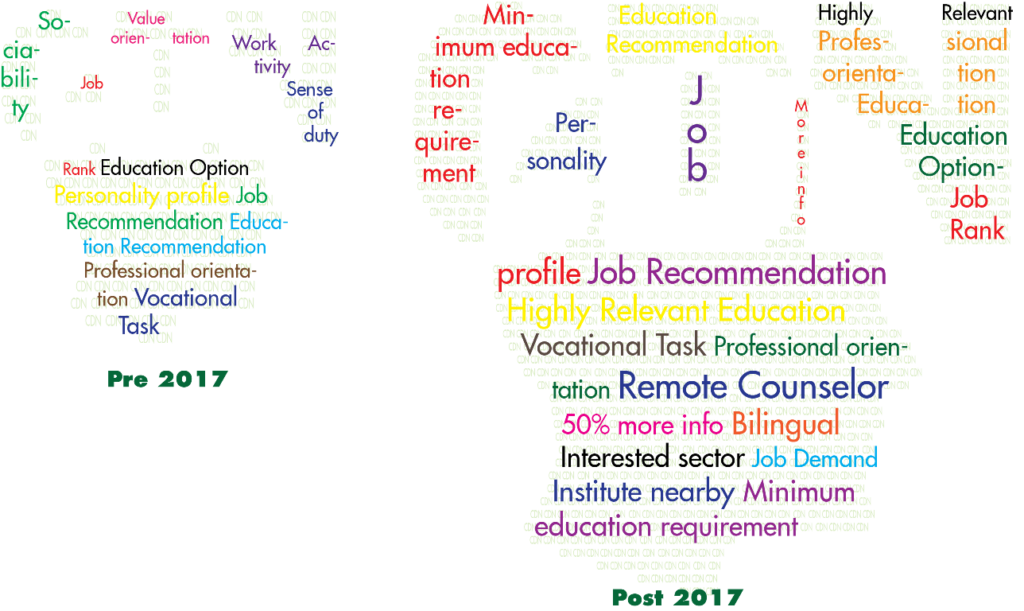
The most effective and sought out CDN services, psychometric assessment’s result has seen a big update. From December 2017 onward, the Psychometric Assessment’s result will be more informative and filled with detailed information that will directly help any youth understand their career possibilities like never before. In the upgraded version, student will know recommended job’s market demand, available institutes, and minimum education requirement to have the respective career and much more at a glance. Along with that, there are numerous exciting features which will help youth find the highest potential in labor market which fits their personality, interest and passion.

What exactly is CDN Psychometric Assessment?

The CDN Psychometric Assessment is a tool used to find career options based on one’s interest and professional orientation, it’s also called interest-based test. We can use this assessment in various settings, and youths use it to test their individual personalities, professional interests, and vocational interests through the assessment. There are altogether four segments one has to give responses to according to their interest and how they react to a different situation(s). The system then analyses the filled information and illustrates their individual personality profile and matching jobs. Youth receive the individual profile, Psychometric Assessment result along with the matching jobs, and required educational information or training for each recommended professions. We are so excited to inform you that, the result has improved with more information and increased from 16 pages to 30 pages.

What are the recent changes in Psychometric Assessment result?

  1. 50 % more information to before

By no means do we mean that the last result was less informative. Our 16 pages result was and still is the most concise and to-the-point youth targeted information Nepal had ever seen. Comparatively, the upgraded result has 50 percent more information. Student will receive more information regarding recommended jobs which will support them to know themselves more in-depth alongside give more push to take accurate action for their education as well as career option.

  1. Golden opportunity to consult with career counselor- from anywhere in Nepal

This is an exciting feature for youth. They can now share their specific interests with career counselor through social media and phone call. Not only that, youth can now consult with career counselor regarding their financial status for the specific jobs. According to these comments along with the psychometric assessment, the professional career counselor can now better recommend the education and career options accordingly. Students can now receive the personal profile according to their personality as well as their socio-economic status! For example, if students’ personality matches for a career which can be attained only from an expensive course (like Doctor) and that they cannot afford it,  then they will receive other options that best fit their finances from the same sector. It has never been so easy to get career counseling in Nepal.

  1. Multi-linguistic feature

. One can choose their preferred language while feeling the online assessment and students gets the results in the preferred language. Everything from our result menus to the personality types is now bilingual.

  1. Easy access to print result without any delay

Nepal does not have the infrastructure for having the personal internet connection. Thus, we were unable to reach a lot of students online. Even if the students did the assessment online, it would be a onetime thing in a computer cyber somewhere, meaning no access to assessment result all the time. This new update has changed all that. Students can now print their personal result immediately on their own. Printed documents definitely are dearer to us than a webpage, right!.

This upgrade is regional-friendly. Youths from around Nepal who were not able to access career counseling can now have all the information about themselves and their career without physically appearing at our office in Bhaktapur. We believe this new change will see that we distribute the results of the assessment to the youth much more efficiently. We can’t wait to hear the feedback from our partners and students about these new changes.

[:]

[:en]Highlights of CDN Crowd Funding Campaign[:]

[:en]

Career Disha Nepal ran “Brighten Nepali Youth’s Career” crowd funding campaign on Indiegogo. The aim of the campaign was to develop career counseling services in such a way that they are easily accessible to youths all over Nepal. The campaign lasted for 40 days from 31st October and ended on the 10th of December 2017.

Approximately, we were able to collect € 2885 by 26 generous backers in the main Indiegogo page. One of the highlights of the crowd fund was that along with helping youths all over Nepal in a long run, the supports too would directly help at least 1 youth as their perk. Among the 26 backers, 14 claimed CDN basic package, 3 claimed slim package, 5 claimed Competence Assessment 2 supporters claimed 2 slim packaged for the whole class and one claimed teacher training and career workshop for the whole class. Directly as the form of perks, more than 65 young students between the ages 15-18 are going to receive some form of career counseling. Alongside this, 6 teachers from 3 different schools are going to receive CDN Career Helper Training to help their students in long run.

To directly implement the perks, we have already chosen perks recipients considering their needs in terms of career and educational urgency, and financial background. Some backers have chosen perk’s beneficiaries themselves and while for others backers we recommended the best recipients. Within the next 2-3 months, we shall be rewriting to our backers about those students who they directly impacted through holistic career counseling.

[:]

[:en]Education System and Labour Market in Germany[:]

[:en]

In the counselling session, we have found that most of the youth have the interest to go to Germany for different purposes, study, visit and work. Considering all of them, we would like to give an overview of Germany which helps them to plan accordingly before they land.

Germany has 82 million inhabitants, 17 million of them have a migration background. According to the Federal Statistical Office of Germany, a total of 43.5 millions of people were employed in 2016. The unemployment rate by the end of 2016 was 5.8 %. The unemployment rate for employees under the age of 20 years was 3.7 %. Compared to other European countries (see European Commission's Eurostat website http://ec.europa.eu/eurostat/web/main/home) the youth unemployment rate is the lowest in the EU. The biggest companies in Germany in 2015 include the vehicle manufacturers Volkswagen AG and Daimler AG, and the energy company Eon.

Germany Economy

Germany is listed as the largest economy in the European Union (EU) and the fourth largest national economy worldwide after the USA, China and Japan. Germany has a strong focus on exports and is ranked as the top listed country in terms of foreign trade, before China and US. The car industry, mechanical and plant engineering, chemical industry and medical technology are high selling sectors. More than 90 % of German companies are small or medium-sized, which contributes two-thirds of all jobs and more than half of Germany’s economic output. Innovation and investments in research and development make Germany a strong competitive economic power.

Living in Germany

Cost of living: broadly comparable to other countries in Western Europe. You’ll find useful information about life in Austria at Vienna Expats, as well as EURES - European Job Mobility Portal in its ‘living and working conditions’ section. https://ec.europa.eu/eures/main.jsp?acro=living&lang=en&parentId=0&countryId=AT

  • Internet domain: .de
  • Currency: Euro (€)
  • The German social and health security system include five parts: sickness insurance, long-term care insurance, pension insurance, accident insurance and unemployment insurance.
  • Health: In Germany, a health insurance is a legal requirement.
  • Type of government: The Federal Republic of Germany is a federal parliamentary democracy.
  • Religion: Roman Catholic (30 %), Evangelical Church in Germany (29 %), Muslim (almost 5 %), other (almost 3 %), without confession (33 %)
  • Average living costs: Accommodation is the major part of your monthly expenses. Rent prices vary from region to region. Rents in cities are higher such as Munich, Cologne, Stuttgart, Hamburg and Düsseldorf. In the eastern federal states and in some rural areas the expenses for accommodation are cheaper. Compared to other EU states costs for food are slightly cheaper, but costs for local public transport, electricity and going out are high. But prices vary depending on the area where you live.

General Education in Germany

State schools are free of charge in Germany. Parents have to pay for schoolbooks, additional teaching material and class excursions and trips.Primary school (Grundschule) starts with the age of six and takes 4 years. After Grundschule have to choose between Hauptschule (secondary lower school, grades 5-9), Realschule (intermediate school, grades 5-10) or Gymnasium (grammar school) depending on the grades and the abilities of the student. Gymnasium ends with the diploma called Abitur (advanced certificate of education), which is given at the end of Year 12 or 13 and gives a right of access to college and university-level courses.

The Gesamtschule(comprehensive school) is a special form of school, which offers several types of school under one roof from Year 5. Gesamtschule is only found in some of the states. It takes the place of both the Hauptschule and Realschule.Initial vocation training starts at the end of compulsory schooling from the age of 15. It combines part-time academic study and apprenticeship in businesses which offer training within the ‘dual system’. Training takes between two and three and a half years. The apprenticeship program leads to a certificate in a particular field of work. Young people can choose from among around 340 recognised apprenticeship trades.Every student in Germany has to complete at least nine years of education. A student dropping out of Gymnasium, for example, must enroll in a Realschule or Hauptschule until nine years have been completed. Students have to study at minimum one foreign language for at least five years. A second foreign language is required in Gymnasium.

Job opportunities in Germany

Germany requires skilled workers in a number of industries. Most of the demanded professions are doctors, engineers, scientists, IT specialists and professions with vocational qualifications.

The Federal Employment Agency also listed demanded professions in Germany:

https://www3.arbeitsagentur.de/web/wcm/idc/groups/public/documents/webdatei/mdaw/mjc5/~edisp/l6019022dstbai777367.pdf

What is it like working in Germany?

Average working hours:  the working week varies between 38 and 40 hours, normally working hours should not exceed 8 hours per day. However, in some sectors or job positions overtime is common.

Holidays: employees are entitled to 24 working days per year.

Tax rates: If you are liable for tax in Germany, your employer will deduct the tax and contributions from your monthly salary and pay them directly to the State. The rate of taxation depends on how much you earn and other circumstances.

More information can be found here:

EURES – The European Job Mobility Portal (here you will find very useful information about the labour market, living and working conditions, job vacancies, etc.) https://ec.europa.eu/eures/main.jsp?countryId=AT&acro=lw&lang=en&parentId=0&catId=0&regionIdForAdvisor=&regionIdForSE=&regionString=AT0|%20:

Federal Employment Agency https://www.arbeitsagentur.de/en

List of the Federal Employment Agency of demanded skilled workers -

https://www3.arbeitsagentur.de/web/wcm/idc/groups/public/documents/webdatei/mdaw/mtm5/~edisp/l6019022dstbai777367.pdf?_ba.sid=L6019022DSTBAI777372

Information for job and apprenticeship seekers: http://jobboerse.arbeitsagentur.de/vamJB/startseite.html?kgr=as&aa=1&m=1&vorschlagsfunktionaktiv=true

Federal Ministry of Finance http://www.bundesfinanzministerium.de/Web/EN/Home/home.html

Migration Support Centerhttp://www.make-it-in-germany.com/en

Federal Statistical Office (Destatis)

https://www.destatis.de/EN/Homepage.html;jsessionid=78A3B1C67203D10F1141BAF1989728DB.cae1

Statistical office of the European Union - http://ec.europa.eu/eurostat/web/main/home

Alumni Association https://www.alumniportal-deutschland.org/en/

List of Higher Education Institutions https://www.hochschulkompass.de/en.html

[:]

[:en]Weekly Informative Training to Volunteers[:]

[:en]

Majority of youths we deal with (even parents or teachers at some instances), in day-to-day interactions, either inside CDN or during workshops outside, we cannot help but notice the immense misconceptions and false-judgement about career counseling, education system, educational options, career options etc. These misconceptions mostly come from lack of knowledge or/and incorrect guidance from various sources. Now, more than ever, we need these misunderstandings removed from their roots.

We have taken a small step to help resolve this massive problem, in the form of bi-weekly information/ training.

Provide small chunk of information for youths to digest

Youths, above all, cannot be over-fed with information regardless of their importance. Therefore, we have thought about making these information sessions short with fixed target. Each session includes topic ranging from increasing one’s efficiency in professional setting to knowing about the evolving education system of Nepal.

Frequency

If not revised, between 50%-80% of information will be forgotten within the first 24 hours, informs the Curve of Forgetting. We therefore, frequent our information/training sessions twice every week (every Tuesday and Thursday). We also give tasks for the youths to stay at the top of their games during and after the sessions.

Make it interactive

If the sessions are boring, we might as well give up right away. Keeping that in mind, we make sure that we keep the variety of learning techniques in the sessions. Visual and graphic representation of the information helps in great length. Since the youth are best at verbal communications (chatting), we take advantage of that skill to make the sessions as alive as possible, while at the same time, parting information and skills.

Share, share, share

We work at the moment with around 7 youths; most of them are active volunteers for CDN. We would like to reach more youths, parents and teachers but distributing information is a complex process, as we might not reach the target audience as effectively as we hope. Therefore, we encourage our attendees to share their newly found knowledge to their friends, family, teachers and all who they believe should get the information.

The above information and training sessions take place in CDN main office every Tuesday and Thursday every week from 11:30 am till 13:00 pm. Also, its free of charge.

[:]

[:en]Nepali market information to reduce labour migration flow [:ne]युवाहरुको बढ्दो वैदेशिक यात्रा कम गर्न नेपाली श्रम बजारको जानकारी[:]

[:en]

According to Nepal labour market update ILO 2017, Nepal may face labour shortage of over 3.6 million workers by 2030 if people continue to take up jobs in foreign labour markets. This projection made by government concerns Nepal greatly. Time has come to think seriously for the reason(s) behind labour migration. Did the labour-migrated people really know about the career possibilities in Nepal? Did they know about the working area in country of destination? These questions need answers quickly, and most of us suspect that the answers are quite gloomy.

Labor market in Nepal and outside Every year, approximately 500,000 new youths enter the labour market. Among them 80 percent is absorbed by foreign labour destinations and the remaining 20 percent work in Nepal. One of the leading causes behind the labour migration could be the lack of information about the available jobs in Nepal. According to the ILO, CTEVT, NSTB and CDN research in Nepal there are more than 300 jobs available in both sectors academic as well as non-academic. Yet, many youths are unfamiliar with all these professions. A research by Career Disha Nepal showed that 85% of the 800 youths surveyed chose 5 jobs as their dream jobs. When speculating closely, it is seen that majority of Nepali youths are attracted to the academic jobs (doctors, engineers etc.) but only a few get the chance to get the career according to their academic choices. Because of the heavy supply of labour in academic sector in the recent years, there is naturally a high competition to get employed in the respective jobs. Most often than not, youths do not find themselves fitting well in the job market of Nepal not noticing other available opportunities. This can be one of the many reasons why youths tend to choose labour migration as the ONLY option.

Career Information to counter brain-drain Youths have limited or no information about the career that are available in Nepal. Observation shows that jobs are chosen ‘as they come’ without much reflection about the skills gathered from training and academics. This can be seen as most work on foreign land (usually Arabic countries) are usually in low skill sector such as building and construction etc. However, countering to the current conception, there is still a high demand for jobs in various different sectors like agriculture, engineering, IT and the list could go on. Most of these jobs required only vocational and professional training. Having lack of information about the different careers provided by vocational training can lead to unemployment in Nepal and fleeing to other countries seems like the only solution.

Career Disha Nepal is helping to youth to find out the best-fitting career and simultaneously helping the nation to develop sustainably. To create well-informed youth on career and education, CDN has developed the job and education database where there is information about 300+ jobs, job requirements, education, skills, overview, their demand on labour market and much more. You can go visit the database, https://jobedudb.careerdishanepal.org/. By having, information about the possibility in Nepal can give the huge boost of confidence for the youths to be in Nepal.

[:ne]

नेपाल सरकारले सन् २०१७ मा गरेको पूर्वानुमान अनुसार यदी वैदेशिक रोजगारका लागि युवाहरु यसरीनै क्रमिकरुपमा बढ्दै जाने हो भने, नेपालमा सन् २०३० साल सम्म ३.६ लाख भन्दा बढि श्रमिकहरुको अभाव हुनेछ | यो अनुमानले सम्पूर्ण नेपालीहरुलाई चिन्तित बनाएको छ | युवाहरुको वैदेशिक यात्रा प्रति ध्यानआकर्षण बढ्नु पछाडीको कारणहरु पत्ता लगाउने र समाधानका उपाएहरु गम्भीर रुपमा सोच्ने समय आइसकेको छ | के वैदेशिक रोजगारमा गएका श्रमिकहररुलाई नेपाली श्रम बजारको पर्याप्त जानकारी थियो होला ? के उनिहरुलाई गन्तव्य क्षेत्रमा  जानुपुर्व सम्बन्धित स्थानमा उपलब्ध पेशाहरुको बारेमा प्रयाप्त जानकारी हुन्छ ? यी प्रश्नहरुको तुरुन्त उत्तर खोज्नु अत्यन्त आवश्यकता छ | हामी मध्ये धेरैलाई यी प्रश्नहरुको उत्तर उदासीन छन् भन्ने थाहा छ |

नेपाली श्रम बजार र बाहिर

प्रत्येक वर्ष लगभग ५ लाख भन्दा बढी युवाहरु श्रम बजारमा प्रवेश गरेको पाइन्छ | त्यसमध्ये ८०%  वैदेशिक रोजगारको गन्तब्य तर्फ लाग्छन भने बाँकी २०% नेपालमा काम गर्छन | वैदेशिक रोजगारीमा युवाहरु आकर्षित हुनुको प्रमुख कारण नेपालमा उपलब्ध पेशाहरुको प्रयाप्त जानकारीको अभाव हुनु हो | ILO, CTEVT, NSTB, CDN को अनुसन्धान अनुसार नेपालमा शैक्षिक र व्यवसायिक तालीम दुवै क्षेत्र गरि ३०० भन्दा बढि पेशाहरु  उपलब्ध छन् | अझै पनि नेपालका धेरै युवाहरु नेपाली श्रम बजारमा उपलब्ध पेशाहरुसंग अपरिचित छन् | CDN ले ८०० जना युवाहरुको समुहमा गरेको सर्वक्षणमा जम्मा ५ वटा पेशाहरु मात्र उनीहरुले गर्न चाहेको पाइयो | नेपाली युवाहरुको शिक्षा छनोटलाई नियालेर हेर्दा, प्राय युवाहरुको छनोटमा शैक्षिक क्षेत्र अन्तर्गत पर्ने डाक्टर, इन्जीनियर जस्ता पेशाहरु पर्ने हुनाले थोरैले मात्र सम्बन्धित क्षेत्रमा करियर निर्माण गर्न सफल हुन्छन् | यी पेशाहरुमा धेरै श्रम शक्तिहरुको आपूर्ति भएको कारण स्वभाविक रुपमानै सम्बन्धित पेशामा प्रतिस्पर्धा बढी रहन्छ | सिमित युवाहरु मात्र यी केहि प्रमुख मानिएका पेशा हासिल गर्न सफल हुन्छन् | वाकी युवाहरुले अन्य पेशागत विकल्पहरुलाई ध्यान नदिई वैदेशिक रोजगारीलाईनै प्रमुख विकल्पको रुपमा मान्दछन् |

प्रतिभा पलायन नियन्त्रणको लागि पेशागत जानकारी 

प्राय युवाहरुलाई नेपली श्रम बजारको बारेमा सिमित तथा केहि पनि जानकारी नभएको पाइन्छ | अवलोकनले देखाएअनुसार प्राय वैदेशिक रोजगारीमा जाने युवाहरुले व्यक्तिगत सिप र क्षमता बाहेकका पेशाहरु, अन्य जस्तो पेशा भेटिन्छ त्यही पेशा गर्न गएको पाइन्छ | प्राय अरवी मुलुकमा रोजगारीको लागि जाने नेपाली युवाहरुले जोखिमयुक्त, अस्वस्थ वातावरणमा र शारीरिक बल प्रयोग गर्नु पर्ने पेशाहरु गर्ने गरेको पाइन्छ |  तर, नेपाली श्रम बजारमा हेर्ने हो भने कृषि क्षेत्र, इन्जीनियरिंग, सुचना तथा प्रविधि जस्ता पेशागत क्षेत्रहरुमा कामदारहरुको माग बढी रहेको पाइन्छ | प्राय यी पेशाहरु गर्नको लागि छोटो तथा लामो अवधिका व्यवसायिक तालिमको आवश्यकता पर्दछ | व्यवसायिक तालिम बाट गर्न सकिने पेशाहरुको बारेमा प्रयाप्त जानकारीको अभावका कारण पनि नेपालमा बेरोजगारी सृजना गरेको पाइन्छ | प्राय युवाहरुलाई वैदेशिक रोजगारीनै बेरोजगारीको एक मात्र  समाधान जस्तो लाग्दछ |

करियर दिशा नेपालले युवाहरुको व्यक्तित्व र क्षमता अनुसारको सुहाउदो पेशा क्षेत्र रोज्न सघाउनुको साथसाथै देशमा दिगो विकास गर्नपनि सहयोग गर्दछ | शिक्षा र करियर सम्बन्धि प्रयाप्त जानकार युवाहरुको सृजना गर्नको लागि CDN ले पेशा र शिक्षा डाटावेश विकास गरेको छ | जहाँ ३०० भन्दा बढी पेशाहरुको विस्तृत विवरण उपलब्ध छ | सम्बन्धित पेशा गर्नको लागि आवश्यकताहरु, शिक्षा, क्षमता, सम्बन्धित पेशाको श्रम बजारमा माग र पूर्तिको साथसाथै अन्य सम्पूर्ण जानकारीहरु उपलब्ध छ | शिक्षा तथा पेशाको पूर्ण जानकारीको लागि यो लिंकमा jobedubd.careerdishanepal.क्लिक गर्नुहोस | नेपालमा रहेका पेशागत सम्भावनाहरुको बारेमा युवाहरुलाई पूर्ण जानकारी भएमा उनीहरुलाई नेपालमै बसेर काम गर्न ठुलो प्रोत्साहन मिल्दछ |

[:]

[:en]Career Orientation Workshop at Norbuling [:]

[:en]

On the 3rd of November 2017, CDN conducted the career orientation workshop to 23 students of grade 8,9,10 and +2 residing at Norbulling children’s home, Boudha Mahankal, Kathmandu. CDN career counselor Hari Krishna Dahal with the help of NCH representative facilitated this workshop.

Norbulilng children’s home (NCH) is a pure humanitarian aid organization established in 2006. NCH is a non-government, non-political and non-profit making organization. NCH is a home for all the needy children in Nepal dedicated to serving the needy children comprising orphan, destitute, underprivileged, street children, child labour etc by providing them a  homely home with full of parental love and affection along with providing quality education, food & shelter. At present, they want to provide each student life-sustaining education and secure their career. NCH and CDN are helping the students find their potential, and guide them further to achieve successful career holistically.

The aim of this interactive workshop was to inform students the importance of career counseling: to have a suitable and successful career based on inborn abilities, interest, and values. On the other hand, to make students more confident and comfortable to share their education and career problems openly with the career counselor to further career counseling approach.

The two hours brainstorming program started with problem-solving games where each participant generated their own ideas interactively and finalized the solution. Students were raising the question regarding career and education. Students cannot wait for the next visit of CDN to participate in the future career counseling sessions.

[:]